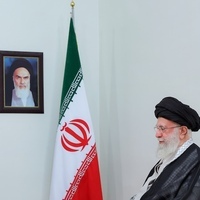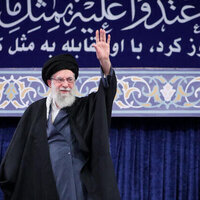


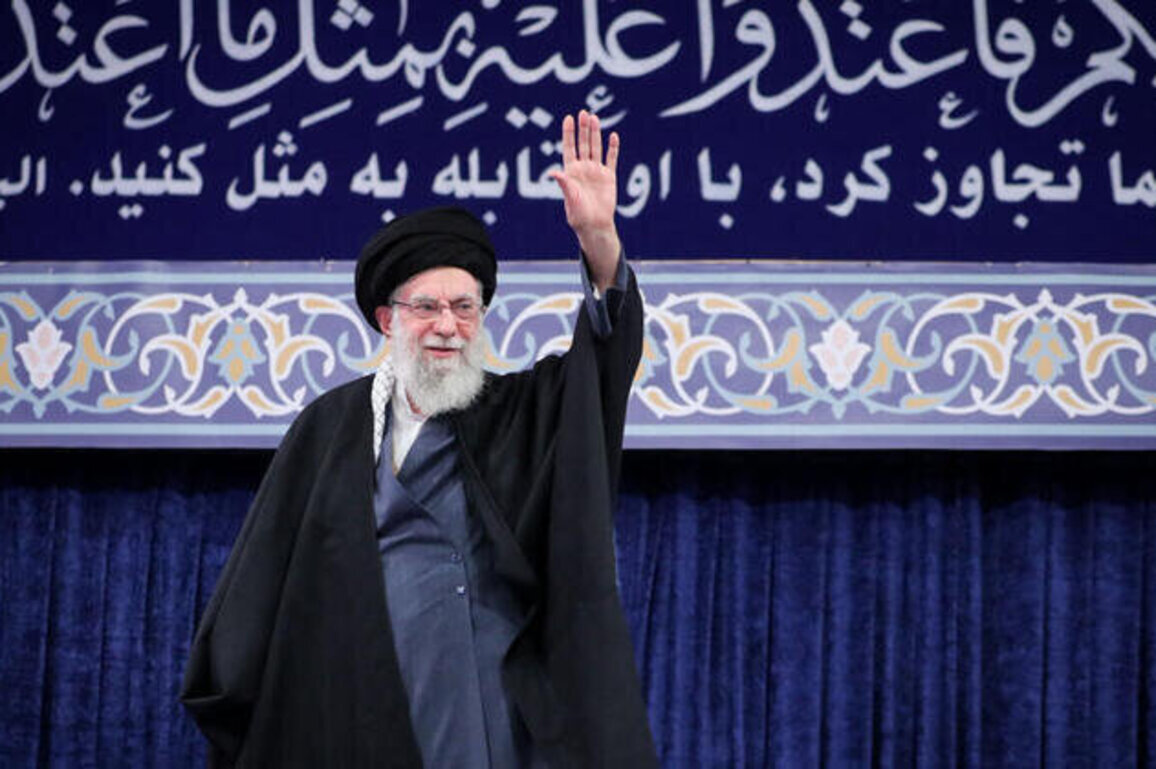
IransAyatollahAli Khamenei onFebruary 28 died age86 in a major attack on Iran launched by Israel and the United States.The countrys supreme leader from 1989 2026,Khamenei wasaconservative cleric with fervent political beliefs whose tight gripon power led to theconsolidationof an authoritarian regime inIranand direct confrontations with the West andIsrael.
Khamenei was born in July 1939 in the northeastern city of Mashad. His family was very religious and hailed from Irans Turkish-speaking Azeri minority.
As a young man, he began advanced religious studies in theholycity of Qom under the tutelage of Irans future theocrat, theAyatollah RuhollahKhomeini.In the areas of political and revolutionary ideas and Islamic jurisprudence, I am certainly a disciple of Imam Khomeini," read aquote from Khameneion his official website.
A studious disciple with a passion for poetry, Khamenei not only followed his mentors religious teachings, he also followed Khomeini into politics, joining the Islamic opposition during ShahMohammad Reza Pahlavis reign.
Launched by Khomeini in 1960, theIslamic oppositionaimed to overthrowtheshah,who ruled as an absolute monarch.Khamenei was arrested and imprisoned multiple times for participatinginanti-regimeprotestsbefore the fall of the monarchy during the1979Iranian RevolutionandKhomeinissubsequenttriumphant return to Iranfrom exile.
TheIslamicrevolution also kick-started Khameneis own political rise.WhenKhomeini became Irans new supreme leader,he appointedKhameneitothe influential positionof the imam leading TehransFriday Prayers. He also became thesupremeleaders representative on the Iranian Supreme Defence Council.
Controversial succession
In June 1981,Khamenei survived an assassination attempt when a bomb hidden inside a tape recorder exploded next to him in a Tehran mosque. He lost the use of his right arm in the attack.I felt thatGod was sparing me and saving me for heavier responsibilities, he later said of the incident.
Four monthsafter the assassination attempt,Khamenei, aged 41,was electedIrans president with a landslide95 percent of the vote. He was re-elected in 1985, during the Iran-Iraq war.
The day afterKhomeinis death onJune3,1989,Khamenei wasappointedas Irans new supreme leaderfollowing an extraordinary meeting of the Assembly of Experts.
Khomeini himself had chosen Khamenei to be his political successor, ousting previous candidateAyatollah AliMontazerifor his democratic leanings. But it was a post he was supposed to hold for an interim period until amore religiously qualified candidate was selected.
Despite Khameneis black turban marking himas a descendent of the Prophet Mohammed,he held only an intermediate rank in the Shiite clergy.
In controversial circumstances that remain unclear,Khameneiwas hastily appointed ayatollah without having completed the required theological studies.
Once in power, Khameneitookadvantage of a power struggle between future Iranian president Hashemi Rafsanjani and Ahmed Khomeini (the son of the former leader) both of whom coveted his post to consolidate his position.
As a new leader holding increasingly radical and conservative beliefs, he made constitutional amendments giving him total control over the country and its institutions under the principle ofvelayat-e-faqih,orrule ofreligious jurists, enshriningthesupremacy of theclergy over the state.
Ultimately,Khamenei took complete control of all the levers of power in Iran.He operated as supreme commander of the Iranian armed forces, giving him final say in matters of security, defence and foreign policy. He had the power to dismiss the president andvalidate presidential elections, and he appointed all of the countrys top security chiefs and the head of the judiciary.
Green movement, Mahsa Amini: protests against authority
AlthoughKhamenei lacked the religious authority of his predecessor, he was deeply political.
On the home front, he took advantage of the balance of power within the regime and began to use Irans security forces, including the Revolutionary Guards, to implement his policies. He formed a close relationship with General Qasem Soleimani, who was considered Khameneis second in command until he was assassinated by a US drone strike in January 2020.
Overseas, Khamenei adopted a strategy of tension with the West and with neighbouring Arab countries such asSaudi Arabia.
Khamenei managed to maintain his grip on power with bloody suppressions of street protests, including the 1999 student protest, the Green Movement against the controversial 2009 re-election of PresidentMahmoud Ahmadinejad, andprotests against rising pricesin 2017 and 2019.
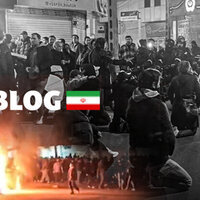
In September 2022,amassive protest movementwas sparked by the death ofMahsa Amini, a 22-year-old woman who died in hospital after being arrested by the morality police for improperly wearing her hijab.Widespread outrage over suspected police brutality gave rise to the Woman, Life, Freedom movement, with protestors calling for death to the dictator.
In the year after Aminis death,NGOs reportedmore than 500 protesterswere killed by the regime.
An isolated regime
Alongside homegrown protest movements that tested Khameneis authority and pushed his regime to its limits, on the international stage he became the central figure in one of the most significant geopolitical conflicts of the 21stcentury: Irans nuclear programme.
Accusations from the West andIsraelthat Iran was secretly developing its own nuclear weapon were denied by Tehran.The regimesisolationon the international stageincreased withtense negotiations with major international powers, whoslappedsanctions that brought the Iranian economy to its knees.
In 2015, Khamenei who frequently criticised the US for its deviant culture and criminal diplomacy gave his approval for thesweepingnuclear dealbetween Iran and the US, Russia, China, Britain, France and Germany. Under the deal, Iran agreed to limit itsnuclear programme, accepting surprise UN nuclear inspections,in exchange for sanctions relief.
Thenucleardealwas viewed with suspicion in Israel and Saudi Arabia, particularly asIran increasedits influence in Iraq, Syria, Lebanon and Yemen, stoking tensionsin the region.
In 2018,during US President Donald Trumps first termin the White House, the USwithdrew from thenuclear dealandslapped cripplingsanctions against Tehran, reigniting tensions between Iran, the West and western allies in the Middle East.
On Khameneis orders, Iran retaliated by accelerating its nuclear programme.
By 2021 as talks aimed at reinstating the treaty resumed, withindirect participation from the USthe Islamic Republic had reached nuclear milestones including increasing its uranium enrichment rate to an unprecedented 60 percent.
On October 7, 2023, an unprecedented attack on Israel by Palestinian militant group Hamastriggered a chain of events that would destabilise Khameneis position on the international stage.
Hamaswas part of an axis of resistance in the Middle East, created by Khamenei and Soleimani, uniting militant and political organisations such asHezbollahin Lebanon and the Houthis in Yemen.
Retaliatory attacks by Israel on Hamas, Hezbollah and the Houthis in the wake oftheOctober 7attacklargely decimated their leadership, taking out what Khamenei intended to be a first line of defence deterring direct attacks on the Islamic Republic.
In the autumn of 2024, Khamenei watched helplessly as Israeleliminated Hassan Nasrallah, the Hezbollah leader who had pledged allegiance to Irans supreme leader, along withYahya Sinwar, the leader of Hamas in the Gaza Strip.
In Syria, rebels toppled long-term allyBashar al-Assad, leaving Khameneis grip on the region dramatically diminished.
Hunted by Netanyahu
With Irans proxies weakened, the path was cleared for Israeli Prime MinisterBenjamin Netanyahuto launch direct attacks on Iran that he said would dismantle Khameneis nuclear programme.
A 12-day war broke out in June 2025, when Israeli strikes targeted hundreds of military and nuclear sites in Iran, killing high-rankingIranianofficials and nuclear scientists.
Tehran launched drones and missile attacks on sitesacrossIsrael in response, notably targeting Tel Aviv and Haifa.
After the USjoined the fray, launching strikes on targets in central Iran,all sides accepted a ceasefire deal imposed by Trump.
As Khamenei went into hiding while his country was bombarded, Israeli Prime Minister Benjamin Netanyahu said that killing the ayatollah would put an end to the conflict.
The Unites States know exactly where the so-called Supreme Leader is hiding, Trump posted on his Truth Social platform. Hes an easy target, but is safe there We are not going to take him out (kill!), at least not for now.
Read moreAli Khamenei: Backed into a corner, Irans ruthless leader faces fight for survival
During the conflict, none ofTehrans allies,such asChina and Russia, came to Khameneis aid. Irans supreme leaderemerged from the12-daywar having suffered the double humiliation of discovering the extent to which Israeli spies had infiltrated the highest echelons of his regime, and of seemingly owing his survival to the USpresident.
In January, he has ordered the deadliest crackdown since the 1979 Islamic Revolution, saying those protesting nationwide, initially against soaring prices, "should be put in their place" before security forces opened fire on demonstrators chanting "Death to the dictator!". He blamed US President Donald Trump for the unrest, saying: "We consider the US president criminal for the casualties, damages and slander he inflicted on the Iranian nation."
Under pressure to negotiate, Tehran agreed to several rounds of talks, while the US president threatened the Islamic Republic with military intervention if the discussions did not result in an agreement on Iran's nuclear program.
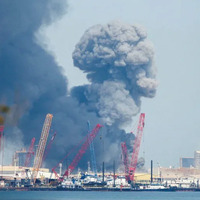
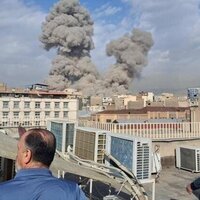
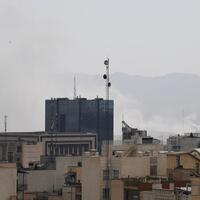
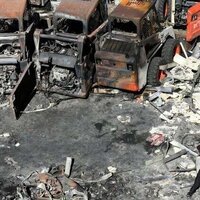
On February 28, Israel and the United States launched a campaign of air strikes described as preventive against Iran, stating that it was expected to last several days. Donald Trump directly calls on the Iranian people to seize power. Among the targets in Tehran was Ali Khamenei's coumpound.
Khameneis death, after decades of consolidating his grip on power, opens a period of deep uncertainty for Iran, the future of its nuclear programme and the survival of a regime that is increasingly isolated internationally and rejected by much of the countrys youth.
Adapted from the original in French by Joanna York
Originally published on France24